
Anti-wear plate
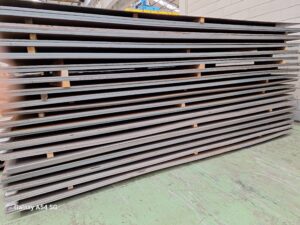
Anti-wear plate (also called anti-tear or anti-abrasive sheet) is a metal material designed to resist extreme conditions of friction, impact and abrasion, much more than a conventional sheet. It is generally made of special steel with treatments that give it high hardness and long service life.
Main features of the anti-wear plate
- High hardness
- It is measured on the Brinell scale (HB). The most common range from 400 to 600 HB, with 400 HB being a balance between hardness and ease of machining, and 500-600 HB being more resistant but less workable.
- Abrasion and impact resistance
- They withstand frictional wear (stones, minerals, aggregates, scrap metal, etc.) and repetitive shocks.
- Durability
- It multiplies the useful life compared to conventional sheets, reducing maintenance and replacement costs.
- Weldability and machining
- Some grades are weldable and can be cut by plasma, oxy-fuel or laser.
- The higher the hardness, the more difficult it is to machine.
- Format versatility
- It is produced in different thicknesses (3 mm up to 100 mm or more) and plate sizes, allowing it to be adapted to multiple industries.
Applications of the anti-wear plate
It is used in sectors where materials produce great friction or impact. Some examples:
- Mining industry
- Hoppers, crusher liners, gutters, wheel loaders, ore conveyor belts.
- Quarries and aggregates
- Mill liners, screens, conveyors, vibratory feeders.
- Construction and public works
- Excavator blades, bulldozers, motor graders, dump trucks.
- Recycling and metallurgy industry
- Scrap metal shredders, containers, presses.
- Agribusiness
- Combine hoppers, grain handling equipment, augers.
- Energy and cement companies
- Coal pipelines, furnaces, crude oil mills and clinker.
References and Measurements of Anti-Wear Plate
| Property / Sheet | HB400 | HB450 | HB500 |
|---|---|---|---|
| Hardness (HBW) | 370 – 430 (rated 400) | 425 – 475 (rated 450) | 470 – 530 (rated 500) |
| Tensile Strength (MPa) | 1000 – 1250 | 1250 – 1450 | 1350 – 1650 |
| Yield strength (MPa) | 900 – 1000 | 1100 – 1200 | 1200 – 1400 |
| Elongation (%) | 12 – 15 % | 8 – 12 % | 7 – 10 % |
| Charpy V Toughness (-40 °C) | 30 – 40 J | ≥ 30 J | 20 – 30 J |
| Weldability | Very good (preheating to high thicknesses) | Good (requires preheating >20 mm) | Acceptable, more demanding (preheating and input control) |
| Ease of bending/machining | High | Medium | Low |
| Wear | Good | Very good | Excellent |
| Typical | 3 – 130 mm | 3 – 80 mm |
3 – 60 mm |
